
Goals
- Raise awareness of and interest in the new JOE Radler 0.0 product.
- Encourage users to download a coupon in the MOL Move app.
- Compare ad recall and purchase intent between interactive and static creatives.
- Gain insights into ad frequency to inform future campaigns.
For the launch of the non-alcoholic JOE Radler 0.0 drink, MOL & INA worked with iPROM to combine its first-party data, artificial intelligence and the interactive iPROM 360 Ad format in a campaign that increased purchase intent. The iPROM Brand Lift Study found that the interactive creative generated almost five times the lift in ad recall and five times the lift in purchase intent compared with the static creative. The interactive format also achieved an approximately 48% higher click-through rate.
The challenge
In summer 2026, MOL & INA introduced the new non-alcoholic JOE Radler 0.0 drink at its service stations. The company wanted to introduce the product to potential customers, build interest and encourage them to download a coupon in the MOL Move app.
To plan future activities, the client also needed evidence of which way of presenting the product was more memorable and more effective at increasing purchase intent. The campaign therefore combined advertising with a comparison of the communication impact of interactive and static creatives.
Strategy and creative solution
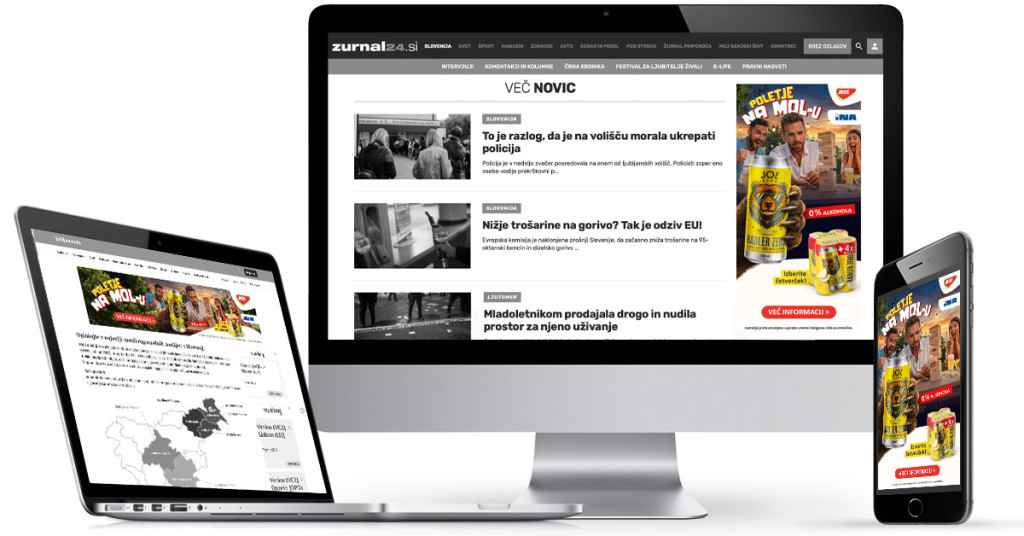
MOL’s first-party data, held in its Private DMP platform, provided the data foundation. iPROM combined these data with AI to target users and optimize media buying. Throughout the campaign, which ran on desktop and mobile devices, we adjusted the balance between static and interactive formats, audience segments and retargeting.
We placed a three-dimensional JOE Radler 0.0 can inside the interactive iPROM 360 Ad format. Users could rotate and explore the can directly within the ad. On the back, they discovered a discount code and could then proceed to download the coupon in the MOL Move app. This interaction connected product discovery with an offer and the next step in the customer journey.
During the campaign, users rotated the can more than 588,000 times. These product interactions were tracked separately from campaign clicks and interactions with the ad.
Measurement and results
The campaign reached 527,882 users, generated 5,880,974 impressions and recorded 43,448 clicks or interactions with the ad. The overall click-through rate (CTR) was 0.74%.
We measured the communication impact through the iPROM Brand Lift Study, involving 1,121 users: 508 in the test group and 613 in the control group. Across the campaign, the study found a 4.2-percentage-point lift in ad recall and a 3.1-percentage-point lift in purchase intent. The creative comparison produced the following results:
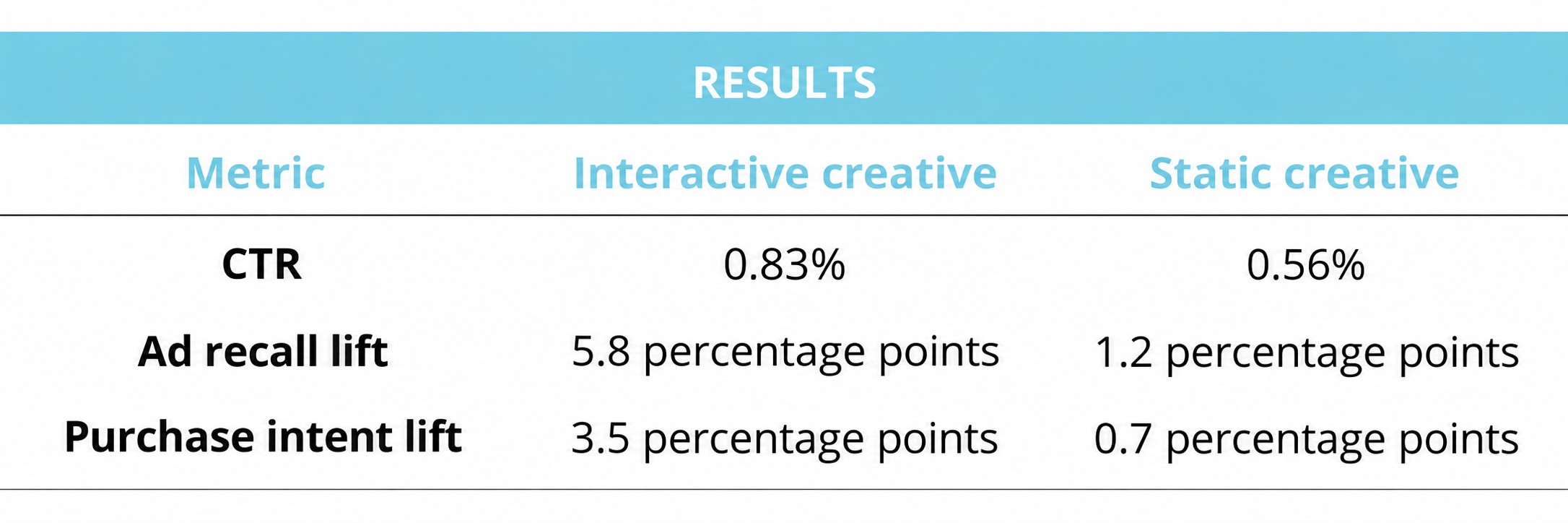
The interactive creative achieved an approximately 48% higher CTR, almost five times the lift in ad recall and five times the lift in purchase intent compared with the static creative. The study metrics therefore revealed a greater difference between the formats than the click-through rates alone.
Of the users who noticed the ad, 75% did not click on it. Similarly, 65% of users expressing purchase intent did not click. The frequency analysis found the greatest measured incremental impact in this campaign at approximately 10 to 12 viewable impressions. These findings gave MOL evidence to guide creative selection and future media buying.
“The JOE Radler 0.0 campaign gave us valuable insights for planning future digital activities. The study confirmed that in today’s media environment, where consumers encounter a large volume of advertising messages at every turn, simply reaching users is not enough: we also need to engage them actively. The interactive creative demonstrated a substantially greater impact on ad recall and purchase intent, while the frequency analysis showed that sufficient ad exposure is essential to achieving the greatest effect. In addition to confirming the effectiveness of interactive formats, we gained concrete data to make more informed media-buying decisions and use our marketing budgets more efficiently in the future,” commented Mojca Jejčič, Communications and Digital Marketing Specialist at MOL & INA.
“At iPROM, we see the future of digital advertising in bringing together clients’ first-party data, artificial intelligence and creativity. In the MOL campaign, we combined these elements with a study of ad recall and purchase intent to give the client a practical basis for future decisions. We aim to build advertising systems that allow companies to retain control over their data and apply what they learn from each campaign to the next. The key is to turn data into better decisions, creativity into relevant experiences and advertising investment into demonstrable value for the client,” added Mateja Kokalj, Digital Media Specialist and Project Lead at iPROM.