

At the Slovenian Marketing Conference (SMK), held in Portorož on 28 and 29 May, artificial intelligence and its impact on the future of marketing emerged as the central themes. In the event’s closing discussion, Simon Cetin, partner and founder of iPROM and co-founder of Retoba Lab, and Haris Begić, CEO of Golden Tree, explored the opportunities and challenges of the AI era. The discussion was moderated by Primož Hvala.
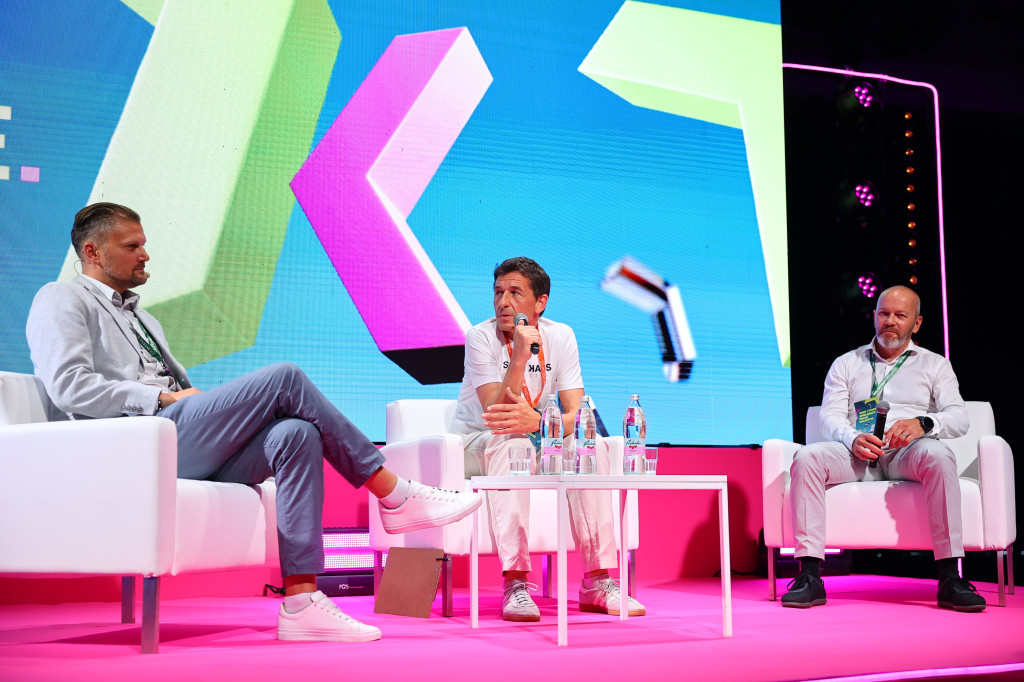
The speakers agreed that artificial intelligence is no longer a technology of the future but a technology of the present. According to Simon Cetin, the agent economy is already taking shape, and companies will need to adopt new approaches and technologies into their operations as quickly as possible.
»We cannot afford to hesitate when it comes to AI. If we find that artificial intelligence creates better ads and generates higher profits, it makes no sense to resist it. That allows people to focus on what truly matters: understanding customer needs,« said Cetin.
At iPROM, artificial intelligence solutions and AI agents have been actively used and tested for some time. Experience has shown that adopting new technologies successfully is not merely a technological challenge but an organisational one above all.
»Not every department embraced AI tools immediately. Today, however, employees use them independently and proactively because they have proven to improve productivity and the efficiency of daily tasks significantly«, Cetin explained.
In his view, AI agents will become an integral part of applications and digital services over the next few years, taking over a large share of routine activities in both personal and business environments.
»Within two years, AI agents will be performing a significant share of tasks on our behalf. They will be embedded in the applications and workflows we use every day. Yet the human element will remain essential. Understanding people, fostering collaboration,and building trust and relationships will continue to create the greatest value,« Cetin emphasised.
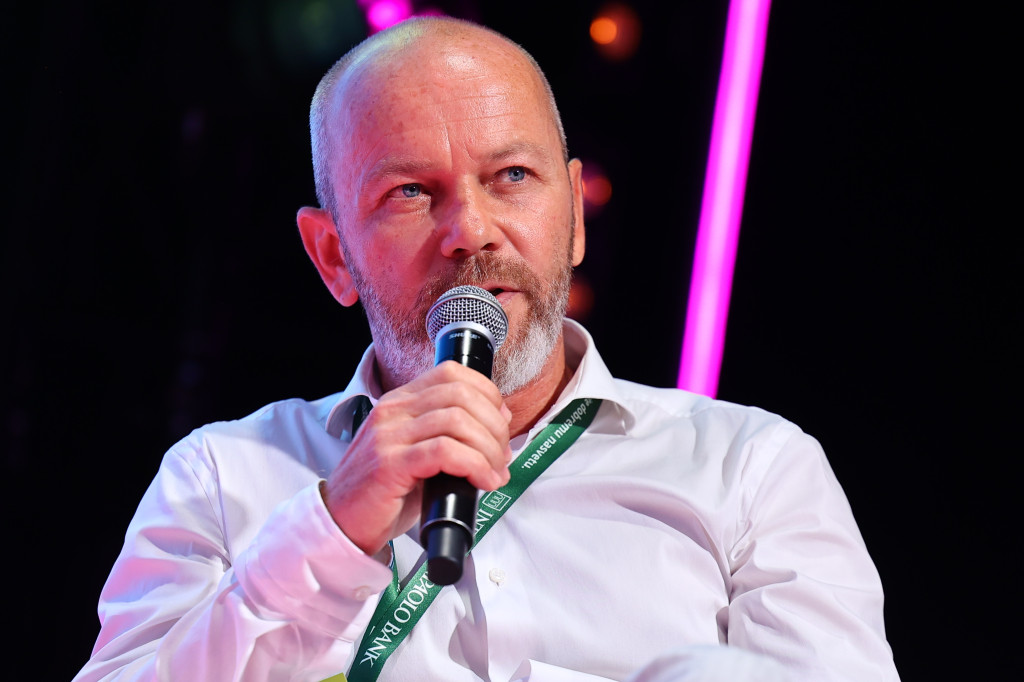
As the discussion concluded, he also highlighted how artificial intelligence will transform trust and decision-making. According to Cetin, people will increasingly rely on recommendations and answers generated by AI systems, often more than on the opinions of colleagues, friends and fellow consumers. This makes it increasingly important for companies and brands to build credibility, authority and visibility in digital environments where AI agents will become key information intermediaries..
»In the future, it will not only be content that competes, but also brand authority. If people place greater trust in AI-generated answers, what will matter most is which sources and brands artificial intelligence recognises as credible,« Cetin concluded.
The discussion followed the conference session “New Marketing Challenges in the Agent Economy”, where speakers shared different perspectives on the future of business in the age of artificial intelligence. Gregor Žavcer, co-founder of Datafund, argued that AI agents are becoming the new startups, enabling individuals and small teams to build services and business models that previously required significantly larger organisations.
Daša Rankel Omerović, Senior Lead Communications Expert at Outfit7, discussed the growing importance of Generative Engine Optimisation (GEO) and shared practical approaches her company has successfully implemented in this field. Matic Mele, founder and CEO of ChatTrips, presented examples of AI-powered business process automation and demonstrated how organisations can create additional value for employees and customers while improving business performance through artificial intelligence.
The common message from all speakers was that artificial intelligence is not only transforming marketing tools but also changing the way companies create value for their customers. In the emerging agent economy, the most successful organisations will be those capable of combining the advantages of AI with a deep understanding of people, empathy and trust.
The event highlighted that the future of marketing will not be defined solely by content creation and channel management. It will also depend on understanding how AI systems operate and increasingly influence recommendations for products, services and brands.
In the world of the agent economy, building expertise, credibility and digital authority will therefore become increasingly important, not only in the eyes of people but also in the eyes of artificial intelligence.