

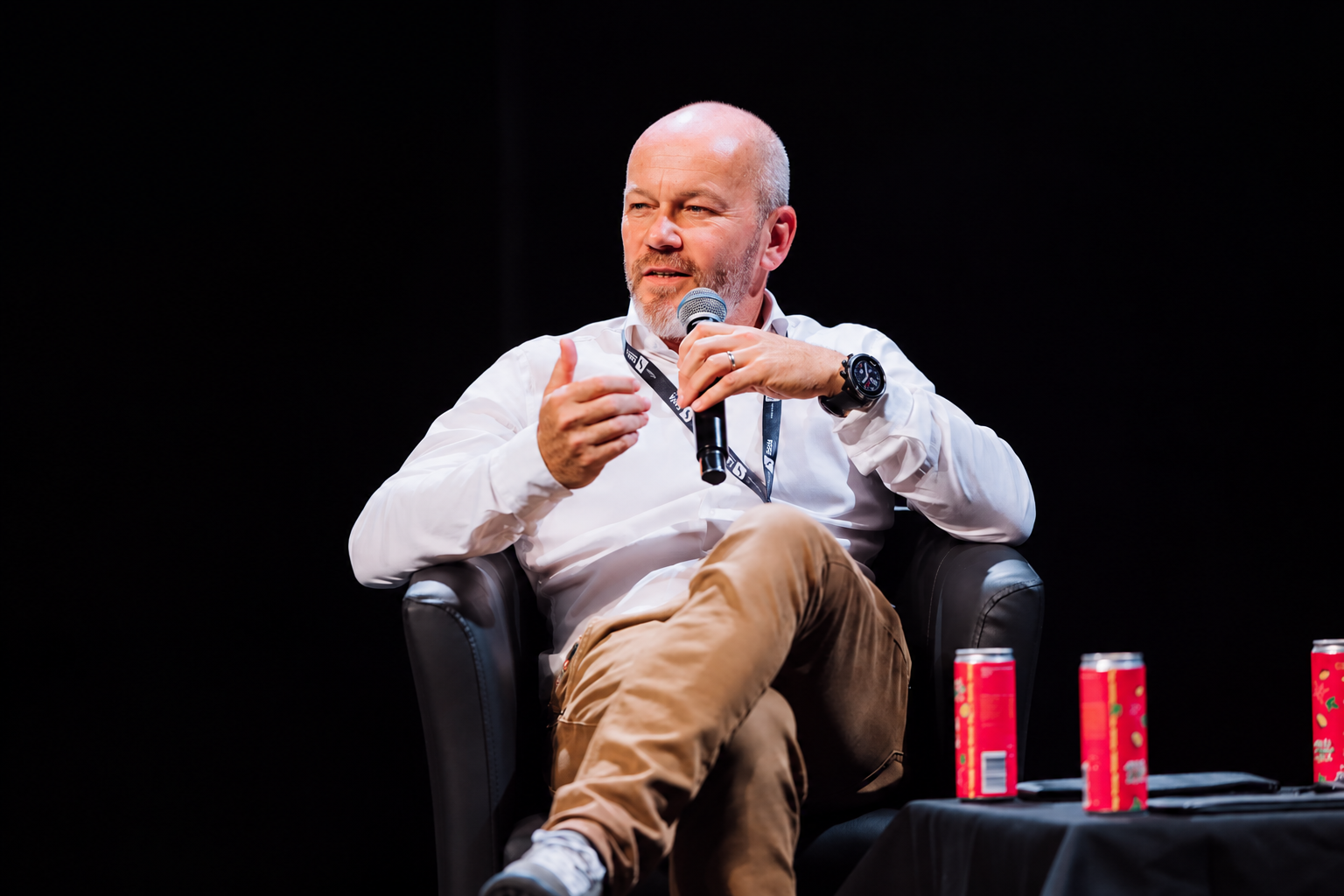
At WEBSI Day 2026, Simon Cetin, Co-founder and Partner at iPROM and Founder of Retoba, discussed how artificial intelligence is changing the path from information seeking to purchase decisions. In a conversation with Brigita Zorec Cetin, AI Architect at Retoba, moderated by Kaja Kovič, Director of the AI D Institute, he highlighted the shift from search to conversational marketing and the rise of AI agents that will not only search and recommend, but increasingly act on behalf of users.

Just a few years ago, users looking for information were accustomed to browsing search results, visiting websites and comparing offers. Today, they increasingly turn to AI and expect a direct answer. According to Cetin, this is the beginning of a much broader change and the Retoba team is prepared to help brands navigate it.
“We are on the threshold of agentic AI and at the point where agents will start acting on our behalf,” Cetin emphasised.
AI agents will increasingly take over tasks that users currently perform themselves, from gathering information and comparing offers to selecting products and completing purchases. For brands, this means that a new intermediary is entering the relationship between them and their customers, one that understands, compares and interprets information.
Brigita Zorec Cetin pointed out that brands today communicate with both people and machines. Marketing, which has traditionally competed primarily for consumer attention, is increasingly competing for interpretation. It needs to focus on how artificial intelligence understands a brand and includes it in its answers.
“Throughout its history, marketing has primarily competed for consumer attention. Today, it is increasingly competing for interpretation, to make it through the filters of artificial intelligence in the first place,” said Zorec Cetin.
From search to conversational marketing
Cetin highlighted that this change is already evident in the way people access information. Instead of searching with keywords, browsing search results and visiting different websites, users increasingly turn to AI with a question.
“Today, we ask. This means we are moving from search marketing to conversational marketing at every level,” Cetin said.
Websites will also need to adapt. According to Cetin, users increasingly expect to ask a question and receive an answer rather than having to search for information across multiple pages. A website is therefore evolving from a collection of content into a space for direct conversation with a brand.
Conversational interfaces are not simply a new form of user experience. Through users’ questions, companies gain direct insights into their needs, interests and context, creating a new source of first-party data for marketing and product development.
AI does not only see what a brand says about itself
Artificial intelligence does not form its perception of a brand solely from its website or advertising. It combines information from different sources with what users say about the company, its products and services.
Cetin emphasised that consistency between what a brand says about itself and users’ actual experiences is therefore becoming increasingly important. If there is a gap between the two, AI systems will find it more difficult to form a clear and credible picture of the brand, giving AI agents fewer reasons to include the brand’s product or service in a user’s shopping basket.
Zorec Cetin identified transparency, credibility and consistency of information as key factors. A brand’s image needs to be consistent across different touchpoints, as artificial intelligence connects information from multiple sources to form a single picture.
SEO and GEO are only part of a broader shift
Cetin pointed out that there is currently no universal formula for positioning a brand effectively in AI-generated answers. SEO and GEO remain important, but the shift goes beyond content optimisation. Structured data, the technical readiness of websites and digital services, and their accessibility to AI systems and agents are becoming increasingly important.
His recommendation to marketing decision-makers at WEBSI Day was therefore clear:
“Be bold and start experimenting.”
Brigita Zorec Cetin added a practical first step: companies should check whether their websites are technically accessible to AI systems and then ask AI the same questions their users ask. This can quickly reveal how AI currently understands the company and where there is still room for improvement.
Companies are preparing for an environment in which it will no longer be enough for users to find a brand. What will increasingly matter is how artificial intelligence understands and interprets the brand and whether it includes the brand in an answer, recommendation or decision.